

Vinyl records haven't only outlasted cassettes and CDs but have even managed to hold their own against streaming platforms. However, unlike those formats, vinyl requires some attention and effort to achieve top-notch sound quality. The most important part of that deal is keeping your records clean.
Dust, dirt, fingerprints, and residue accumulate on the record's surface. Then, they become embedded in the grooves, where your stylus has to navigate them on every single play. This leads to distortion, noise, and gradual wear.
If you've just started building a record collection, or you've been spinning LPs for years, a few minutes of maintenance before and after each play can make a big difference. Below, we'll walk you through all the maintenance steps, including how to properly clean the records you have just bought.
What You Need to Clean Vinyl Records
- Carbon Fiber Brush: The first thing that you should have with you is a carbon fiber brush. It removes dust from the surface of vinyl records before you play them, and it's gentle enough to use every time without risk of damage.
- Microfiber cloth or lint-free cloth: For wet cleaning, you need a microfiber cloth or a lint-free cloth. An ordinary cloth or paper towel will leave residue behind and can scratch the surface.
- Cleaning solution: A cleaning solution is required when you want to do anything more than just using a dry brush. The best DIY method is to make a solution of distilled water and a small amount of isopropyl alcohol. It's important to use distilled water, as the mineral deposits in tap water can leave residue in the groove. Some collectors prefer a dedicated record cleaning fluid, which is also a great option.
- Inner and outer sleeves protect your records after cleaning: The plastic sleeves protect against dust and scratches, while the anti-static inner sleeves are an alternative to the paper sleeves provided with the vinyls.
How to Clean Your Vinyl Record Using A Carbon Fiber Brush
Step 1: Place the record on your turntable. Set it on the platter as you normally would. You're going to clean it in place before you drop the needle.
Step 2: Pick up your carbon fiber brush. Hold it lightly. This cleaning method doesn't involve you scrubbing. You'll barely even touch the surface. The carbon fiber bristles are fine enough to reach into the groove and lift dust without applying any unnecessary pressure.
Step 3: Lower the brush onto the record's surface. With the platter spinning, hold the brush gently against the record and let it make contact with the grooves. Move it very slowly in the direction of the groove, following the record's circular motion, not wiping across it.
Step 4: Guide the dust to the edge. After a full rotation or two, angle the brush slightly outward to guide the accumulated dust off the record's edge. Do not wipe the dust towards the center of the record.
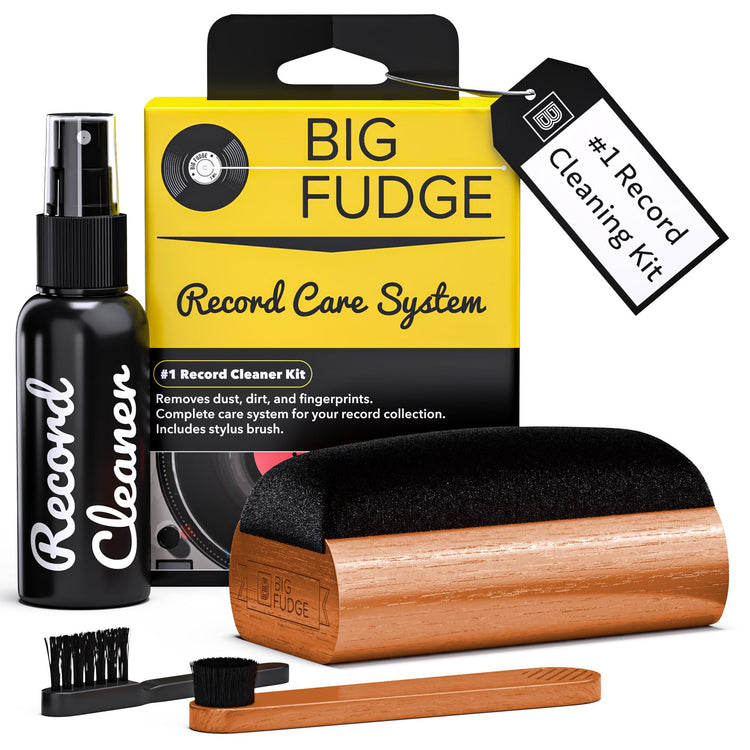
Cleaning & Maintenance Kit
Clean right and your collection will last a lifetime.
Shop NowHow to Deep Clean Vinyl Records in 4 Simple Steps
The basic brush handles ordinary dust. However, when you have records that are dirty, smudged with fingerprints, or haven't been cleaned in a very long time, especially used records you've just brought home, you need a wet clean.
Step 1: Prepare Your Cleaning Solution
An easy and effective DIY mix is roughly 25% isopropyl alcohol to 75% distilled water. Some collectors do not use any alcohol and just use distilled water with a drop of dish soap. Regardless of which fluid you use, you should avoid letting any liquid come into contact with the center label, as it may be damaged.
Step 2: Apply the Solution
Get your microfiber cloth and dampen it with the cleaning mixture. Do not soak the cloth. Just ensure it's moist, not dripping. Apply it to the vinyl gently in circular motions, following the groove. Do not wipe against the groove.
Step 3: Wipe and Rinse
Work your way around the entire record, and use another clean, damp cloth with distilled water only to rinse. As always, follow the groove, avoid the center label, and use minimum pressure.
Step 4: Dry Completely
This is non-negotiable. Place the record vertically on a clean surface and let it air dry for at least a few hours before playing. You should never play a record that's not completely dry. The stylus can drag moisture into the groove, attracting more dirt and potentially damaging the surface.

How to Clean Used and Thrift Store Vinyl Records
Used vinyl is one of the best things about collecting vinyl records. But unlike brand-new records that come in packaging, used ones need a bit more care.
Before cleaning anything, examine the record first. Hold it up to the light at an angle and look at the surface. It's okay for used records to have some light marks and scuffs; they usually clean up fine. But deep scratches that can actually catch your fingernail cannot be fixed by cleaning.
For everything else, a thorough wet clean before the first play is absolutely essential. Used records from thrift shops and estate sales are often stored in paper sleeves for years, handled carelessly, and exposed to dust, dirt, and sticky substances that can't be removed with a dry brush. Mix your distilled water and isopropyl alcohol solution, apply it in a circular motion onto the grooves, rinse with distilled water, and wait a few hours for the record to dry completely before you play it.
Even the most beat-up used albums can sound like brand-new ones after a good clean. Whether it's an old-school version of 2Pac's "Me Against The World" or a second-hand copy of Zach Bryan's "With Heaven On Top," thorough cleaning before the first play is always the right move. If you're unsure which records to buy, here are some of the top vinyl records to own.
How to Store Vinyl Records After Cleaning:
It's not just enough to clean your records. The way you store them after cleaning has a great bearing on how long they will remain free from dirt.
Use Inner Sleeves
The paper sleeves that come with most records do a good job of protecting the record's label, but they shed tiny fibers that settle into the groove over time. Replacing them with anti-static inner sleeves is a small upgrade that solves this problem.
Use Outer Sleeves
Using a plastic outer sleeve ensures that your record is free from dust, moisture, and friction when stacked on shelves. It also keeps the album artwork in better condition, which matters if you're building a collection you actually care about.
Store Records Upright
Stacking vinyl horizontally places weight on the records at the bottom, causing them to warp over time. Keep them vertical, like books on a shelf, and make sure they're snug enough not to lean but loose enough to pull out easily.
Keep Them Away From Heat and Sunlight
Vinyl warps at temperatures you'd consider low. Direct sunlight, radiators, and poorly ventilated spaces are all risks. Keep your vinyl in a cool, dry, consistent environment.
You should also think about how you transport them. When visiting record shops or transporting albums, you need protection against potential damage. The Evergreen Vinyl Eco Tote Bag is strong enough to carry vinyl records safely, and spacious enough to handle a serious haul.

Common Vinyl Cleaning Mistakes to Avoid
Cleaning vinyl records is straightforward, but there are several things people do that do more harm than good. These are the mistakes to watch out for.
Wiping Across the Grooves
This is the mistake people often make. The groove runs from the edge to the center in a spiral, so when cleaning a vinyl record, you should always wipe the disc along the spiral, not across it. Wiping across the groove pushes dirt deeper in rather than lifting it out, and can cause micro-scratches over time.
Using Tap Water
It may seem quite harmless, but tap water contains mineral deposits that leave residue when the moisture evaporates. That residue sits in the groove and affects sound quality. You can read our blog to learn more about how vinyl sound quality compares to CDs.
Using the Wrong Cloth
Paper towels, regular household cloths, and any other non-lint-free material will leave fibers behind on the surface of your record. Always use a proper lint-free cloth or microfiber cloth made specifically for cleaning vinyl records.
Not Letting the Records Dry Completely
Playing a record that's still damp from a wet clean is a bad idea. The moisture left in the groove attracts dirt almost instantly, and dragging a stylus across a wet surface can cause damage. Patience pays off here.
Cleaning the Center Label
The label is paper. Moisture warps it, and the ink bleeds when it comes in contact with cleaning solutions. Never apply any liquids to the center label area, and work only on the grooves.
Using Too Much Pressure
Whatever technique you use to clean your record, light pressure is always the right call. More pressure doesn't make your cleaning more effective; it increases the risk of damaging the surface or pushing particles deeper into the groove.

Frequently Asked Questions
Can I Clean Vinyl Records Using Tap Water?
Tap water has minerals that settle in the grooves when the moisture evaporates. Only use distilled water to wash your records. This water may be used on its own or mixed with a little bit of isopropyl alcohol.
How Often Should I Clean My Vinyl Records?
Cleaning your vinyl records with a carbon fiber brush before each play is the bare minimum. A full wet clean is needed for used or visibly dirty records before their first play, and every few months for records you play often.
How Long Should I Wait Before Playing a Wet-Cleaned Record?
Always let a wet-cleaned record dry completely before playing, ideally for a few hours. Playing a damp record drags moisture through the groove, which attracts dirt immediately and can damage both the record's surface and your stylus.
Conclusion
Cleaning vinyl records isn't a chore, but something that comes with the territory. Brushing off dirt before every play, cleaning the discs with a solution when necessary, and storing them properly afterward adds up to a collection that sounds great and lasts a really long time. Get into the habit early, keep it consistent, and your collection will reward you for it every single time you drop the needle.