

If you've ever looked at a turntable and thought, "This seems complicated for something that plays music," you're not entirely wrong. Compared to tapping a screen, vinyl asks a bit more of you. You have to place the record, drop the needle, and flip the side, but that's also the point.
A turntable plays music by physically reading it. Every groove on a record contains tiny variations that get translated into sound in real time, which is both clever engineering and a good reminder that music didn't always live in the cloud.
The technology behind turntables, shaped by decades of scientific and engineering advancements, has evolved from early phonographs and gramophones to the sophisticated record players we use today. It might look simple from the outside, but a lot is going on beneath that spinning platter.
The good news is you don't need an engineering degree to understand it. Once you know the basics, everything from choosing the right setup to getting better sound makes a lot more sense.
A Brief History of the Turntable
Before streaming and CDs, and well before anyone argued about audio bitrates online, there was the turntable. The earliest version, the phonograph, showed up in the late 1800s, using cylinders to play back sound. This device looked more like a science experiment than a home audio setup, but it proved that recorded music was possible.
By the early 20th century, flat records replaced cylinders, and turntables as we recognize them began to take shape. Record players became the standard device for home audio, and as sound technology advanced, so did the understanding of how recorded sound could be stored and reproduced.
Sound quality improved, formats standardized, and by the mid-1900s, vinyl records were the default. If you wanted to hear music at home, this was the system. Brands competed, designs evolved, and vinyl went from being a novelty to being a cultural staple. Finding vinyl records was very easy.
Then, as expected, something newer came along. CDs, MP3s, and eventually streaming made turntables feel like a relic for a while. But instead of disappearing, they stuck around, first with DJs and collectors, then with pretty much everyone else again. Turns out, there's still something appealing about music you can see, touch, and play on purpose.

The Basic Parts of a Turntable
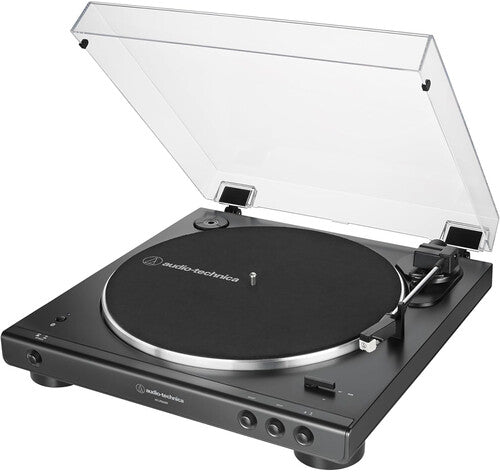
At first glance, a turntable looks like it's just a spinning disc and a needle doing its thing. However, beneath that simplicity lie a few key components working together to turn tiny grooves into sound. Below are the basic parts of a turntable.
Platter
This is the part that spins the record. It's usually made from metal or acrylic, and the platter spins your record at a consistent speed (typically 33⅓ or 45 RPM). If the platter isn't stable, everything else struggles, so it matters more than it looks.
Tonearm
The tonearm holds the cartridge and guides the stylus across the record. It needs to move smoothly and apply the right amount of pressure. Too much, and you wear out your records; too little, and it won't track properly.
Cartridge and Stylus
This is where things get interesting. The cartridge, located at one end of the tone arm, houses the stylus (needle), which sits in the record's grooves. As the stylus traces the grooves, its mechanical movement is transmitted through the cantilever to the other end, where either a magnet-coil system or a piezoelectric crystal inside the cartridge converts these vibrations into electrical signals. In other words, this is the part that actually "reads" the music.
Motor
The electric motor is what keeps everything spinning, literally. It drives the platter either via a belt (belt-drive) or directly (direct-drive). You don't see much of it, but you'd notice immediately if it stopped working.
Plinth (Base)
The plinth is the body of the turntable. It supports all the components and helps reduce unwanted vibrations. A solid plinth keeps things stable, which helps your records sound the way they're supposed to.
Optional Extras - Dust Cover and Cleaning Kit
While a dust cover is technically not essential for playback, it's very useful. It keeps dust off your records and components, which is less about aesthetics and more about avoiding unwanted crackles later. You could also consider a record-cleaning kit to keep your records in tip-top condition.

How Vinyl Produces Sound
At its core, a vinyl record is basically a physical map of sound. Instead of digital files made of ones and zeroes, the music is literally carved into tiny grooves that spiral inward across the record's surface. Those grooves may look decorative, but they're doing all the work.
As the record turns, the stylus moves along the groove and vibrates in response to the compact bumps and ridges. This movement causes the cantilever and magnet attached to the tone arm to move relative to coils, generating an electric current that mirrors the audio waveform.
The record player vibrates as the stylus traces the groove, and this mechanical movement is the first step in converting sound vibrations into electrical signals. These signals are then amplified into something your speakers can actually work with.
What's the Difference between Belt Drive and Direct Drive?
At some point, you'll run into this question, and it will sound more complicated than it needs to be. In reality, it's just about how the turntable spins the record.
A belt drive turntable uses a small rubber belt to connect the motor to the platter. This creates a bit of distance between the motor and the record, which helps reduce vibration. The result is smoother, quieter playback, which is ideal for home listening, where sound quality matters more than anything else.
A direct drive turntable, on the other hand, connects the motor directly to the platter. No belt, no middleman. This results in faster start-up times and more consistent speed, which is why DJs tend to prefer it. It's built for control and durability rather than subtlety.
Neither is "better" across the board. Choosing a drive depends on how you plan to use it. If you're building a home setup and just want your records to sound great, belt drive is usually the go-to. If you need precision, responsiveness, or you like the idea of a more hands-on setup, direct drive makes a strong case.

How to Get the Best Sound from Your Setup
Start with Proper Placement
Your turntable should sit on a stable, level surface. Vibrations (from footsteps, speakers, or that one wobbly table leg) can interfere with playback more than you'd expect. If your record player is shaking, your sound probably is too.
Check Your Tracking Force
The stylus needs the right amount of pressure to track the groove correctly. Too light, and it skips; too heavy, and you're wearing out both the stylus and your records faster than necessary. Most turntables have a recommended range, so it's best to follow it. Guesswork isn't your friend here.
Keep Your Records Clean
Dust is the enemy of good sound. It affects tracking and generally makes everything worse. A simple anti-static brush before each play goes a long way, and occasional deeper cleaning helps keep things consistent.
Don't Ignore the Stylus
That tiny needle is doing all the work, so it deserves some attention. A worn or dirty stylus will reduce sound quality and can damage your records over time. If you've had it for a while and can't remember when you last checked it, that's your answer.
Get Your Speaker Setup Right
Even a great turntable can't fix poorly placed speakers. Give them space, avoid cramming them into corners, and aim for a balanced setup where sound isn't coming from just one direction. You don't need studio acoustics, just a bit of thought.
Play Records You Actually Enjoy
It sounds obvious, but it's worth saying. The best setup in the world won't help if you're not enjoying what you're playing. Whether it's something classic like the Beatles or something current like Sabrina Carpenter, good sound starts with music you actually want to hear.

Frequently Asked Questions
Do I Need Speakers for a Turntable?
Yes, unless your turntable has built-in speakers (which are usually more about convenience than quality). Most turntables need external speakers, and sometimes a preamp in between.
What's the Difference Between a Turntable and a Record Player?
They're often used interchangeably, but there's a slight distinction. A turntable usually refers to just the deck itself, requiring external speakers and components. A record player is typically an all-in-one setup with built-in speakers. One prioritizes sound quality while the other prioritizes simplicity.
How Often Should I Replace the Stylus?
It depends on how often you play records, but a general rule is every 500–1,000 hours of use. If you notice distortion, skipping, or a drop in sound quality, it's probably time. Waiting too long can affect sound and also wear down your records.
Why Does My Record Sound Crackly or Distorted?
The usual suspects are dust, a worn stylus, or an incorrect setup. Dirty records and needles introduce noise, while poor tracking or alignment can cause distortion. Most of these issues are fixable without replacing your entire setup.
Conclusion
Turntables aren't as complicated as they look. Once you understand the basics, most of it comes down to a decent setup and getting the fundamentals right. You don't need to chase perfect sound from day one. Start with something reliable, learn how your setup behaves, and make small improvements over time if you feel the need.